


What Is Kitting?
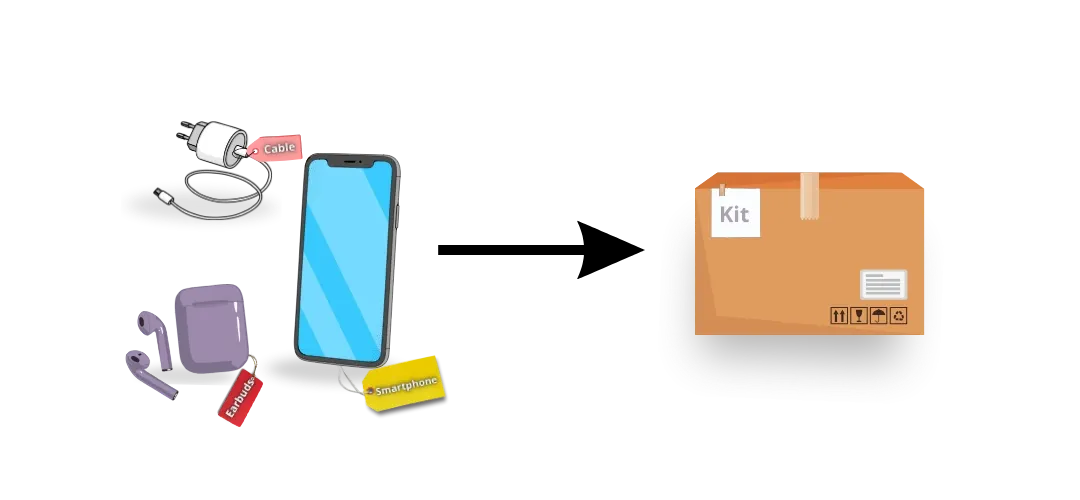
Kitting is the process of grouping, packaging, and delivering individual items as a single unit, often before the final assembly or shipment. Instead of picking each product separately during order fulfillment, businesses pre-assemble kits containing all the necessary components — saving time, reducing errors, and improving operational efficiency.
In logistics and warehouse management, kitting can streamline workflows and minimize repetitive tasks. For example, rather than picking five separate parts for a subscription box, a warehouse worker picks one ready-made kit, already packed and labeled. This approach is especially useful for e-commerce brands, manufacturers, and fulfillment centers handling high-volume or repetitive orders.
Kitting isn’t limited to physical goods; it can also include digital components or documentation bundled with physical products — such as instruction manuals or promotional materials. The key advantage is speed and simplicity: by organizing inventory into pre-defined kits, businesses can fulfill orders faster, reduce labor costs, and enhance the customer experience.
Kitting vs Bundling: What’s the Difference?
While often used interchangeably, kitting and bundling refer to two distinct inventory and fulfillment strategies — and understanding the difference is essential for efficient operations.
Kitting involves assembling multiple, individual items into a single kit that is treated as one SKU in the inventory system. These items are usually not sold individually once kitted, and the kit is often created just-in-time or in advance to streamline fulfillment. For example, a DIY electronics kit might include resistors, wires, and a circuit board pre-packaged and inventoried as one unit.
Bundling, on the other hand, is a marketing or sales tactic where separate products are sold together as a package — often at a discounted price — but they may still be stored and picked separately in the warehouse. Think of a “Back to School” bundle that includes a backpack, notebooks, and pens. Each item retains its SKU and can be sold individually.
In short:
- Kitting = Operational strategy (pre-assembled unit, one SKU)
- Bundling = Sales strategy (multiple SKUs, grouped at checkout)
Choosing the right approach depends on your business goals — whether you’re aiming to optimize warehouse workflows or increase average order value.
How the Kitting Process Works
The kitting process typically follows a structured workflow designed to improve efficiency, accuracy, and inventory control. Here’s how it works step by step:
1. Inventory Identification
The first step is selecting the individual components that will be grouped into a kit. These can be raw materials, finished goods, accessories, documentation, or promotional inserts. Each item must be accurately tracked in the inventory system.
2. Kit Assembly
Once identified, the items are collected — either manually by workers or via automation — and assembled into a predefined kit. This can include packaging them together in a box, bag, or custom container, depending on the product type.
3. Labeling and Barcoding
Kits are labeled with a unique SKU and often a barcode or QR code to streamline scanning during fulfillment. This turns multiple components into a single unit in the inventory system.
4. Storage or Just-in-Time Use
Depending on the business model, the kits are either stored in the warehouse for future orders or assembled just-in-time based on incoming demand. Just-in-time kitting minimizes storage needs, while pre-kitting maximizes speed at the time of order fulfillment.
5. Shipping and Fulfillment
When a customer places an order for a kit, the entire unit is picked, packed, and shipped as one — reducing handling time and improving shipping accuracy.
Efficient kitting requires clear documentation, inventory visibility, and standardized processes — especially for high-volume or customized products.
Benefits of Kitting for Businesses
Kitting offers a wide range of operational and financial benefits, especially for businesses handling high-volume fulfillment, recurring product sets, or complex packaging needs. Here’s how kitting can create value across your supply chain:

1. Improved Efficiency and Speed
By pre-assembling kits, warehouse teams can pick and ship orders faster. Instead of pulling multiple SKUs from different locations, a single kit is picked as one item — reducing picking time and bottlenecks.
2. Lower Labor Costs
Kitting reduces the number of manual steps required during fulfillment, which translates to lower labor costs and less training time for new staff. It also minimizes packing errors and the need for order corrections or returns.
3. Better Inventory Control
Kits are treated as a single SKU, simplifying stock tracking and inventory management. Businesses gain better visibility into product demand and can avoid overstocking individual components.
4. Enhanced Customer Experience
When done right, kitting results in clean, professional packaging and consistent unboxing experiences — crucial for brand perception, especially in e-commerce or subscription models.
5. Customization and Flexibility
Kitting enables businesses to create custom product sets tailored to customer needs or seasonal campaigns without altering core inventory structures. For example, limited-time promotional kits can be assembled on demand without disrupting existing SKUs.
6. Space Optimization
Consolidating multiple items into a single kit can free up valuable shelf space in your warehouse, especially when packaging is designed to be compact and uniform.
From operational efficiency to improved customer satisfaction, kitting is a smart strategy for businesses aiming to scale fulfillment operations while maintaining control and quality.
Is Kitting Right for You?
Answer these quick questions to find out if kitting can improve your operations.
Kitting Use Cases by Industry
Kitting is not limited to a single industry. Its flexibility makes it an effective solution across a wide range of business models — from consumer goods to complex industrial operations. Here are some of the most common use cases by sector:
E-commerce & Subscription Boxes
Online retailers use kitting to pre-assemble popular product combinations, gift sets, or subscription boxes. For example, a monthly grooming kit might include razors, shaving cream, and skincare products packed together in a branded box. Kitting ensures consistency and accelerates fulfillment during high-volume sales periods.
Manufacturing & Assembly
Manufacturers rely on kitting to prepare parts needed for assembly lines. Instead of fetching each component separately, workers receive a kit with all necessary parts — improving production speed and reducing errors. Aerospace and automotive industries, for instance, use kitting extensively for component prep and quality control.
Healthcare & Medical Devices
Hospitals and medical suppliers often kit surgical tools, diagnostic kits, or patient-care items for emergency preparedness or daily operations. This improves organization, reduces waste, and ensures compliance with protocols.
Field Services & Construction
In construction or field operations, kits can include all the tools, hardware, or materials needed for specific tasks. Electricians, for example, may receive a pre-packed kit for a specific wiring job, reducing time on-site and minimizing forgotten parts.
Education & Training
Educational providers often ship training materials as kits — with workbooks, tools, and branded items bundled together. This enhances learning and simplifies logistics for remote programs or onboarding.
Regardless of the industry, kitting provides a repeatable, scalable process that improves delivery, quality control, and customer experience.
In-House Kitting vs Third-Party Fulfillment
When it comes to implementing a kitting strategy, businesses typically face two options: managing the process internally or outsourcing it to a third-party logistics (3PL) provider. Each approach has its advantages — the right choice depends on your scale, infrastructure, and operational goals.
In-House Kitting
Managing kitting internally gives you full control over inventory, packaging, and quality. It’s a good fit for businesses with:
- A dedicated warehouse team
- Low to moderate order volume
- Highly customized or variable kits
- Tight branding or packaging requirements
Pros:
- Greater control over processes and quality
- Immediate access to inventory and feedback loops
- No external coordination delays
Cons:
- Requires staffing, training, and dedicated space
- Slower to scale during peak demand
- Higher upfront operational costs
Third-Party Kitting (3PL Providers)
Outsourcing kitting to a fulfillment partner allows businesses to scale without managing the complexity in-house. It’s ideal for:
- Rapidly growing e-commerce stores
- Businesses lacking warehouse infrastructure
- Seasonal or high-volume product kits
Pros:
- Faster order processing and fulfillment scalability
- Reduced labor and overhead costs
- Expertise in logistics and packaging optimization
Cons:
- Less direct control over kit assembly
- Dependency on third-party timelines and communication
- Potential extra fees for customization
Ultimately, the best approach depends on your fulfillment complexity, order volume, and growth strategy. Many companies start with in-house kitting and transition to 3PLs as they scale.
Common Challenges and How to Overcome Them
While kitting offers significant operational benefits, it also comes with potential pitfalls if not properly managed. Understanding these challenges — and how to solve them — is key to making your kitting strategy a success.
1. Inventory Inaccuracy
Challenge: Without accurate stock levels, it’s easy to run out of one item and stall the entire kitting process.
Solution: Use real-time inventory tracking systems and implement strict receiving and auditing procedures to avoid bottlenecks or missed kits.
2. Poor Kit Design
Challenge: Kits that don’t align with customer needs or lack clear instructions can result in returns or confusion.
Solution: Analyze purchase behavior, test prototypes, and gather customer feedback before scaling a new kit configuration.
3. Packaging Inefficiencies
Challenge: Inconsistent or bulky packaging can increase shipping costs and complicate storage.
Solution: Standardize packaging where possible and work with logistics experts to optimize materials, dimensions, and weights.
4. Labor Mismanagement
Challenge: In-house kitting can strain resources if staffing isn't optimized — especially during peak periods.
Solution: Forecast demand, cross-train employees, and consider outsourcing during high-volume cycles to maintain efficiency.
5. Lack of Process Documentation
Challenge: Without standard operating procedures (SOPs), quality and consistency are hard to maintain.
Solution: Develop and train teams on documented kitting workflows, including assembly steps, labeling, and QA checklists.
By anticipating these issues early, businesses can build a scalable and reliable kitting operation that grows with them.
FAQ About Kitting
What types of products are best suited for kitting?
Kitting is ideal for products that are frequently purchased together, have multiple small parts, or require a standardized assembly. Examples include subscription boxes, promotional gift sets, repair kits, and assembly components in manufacturing.
Is kitting only for physical goods?
No. While most kitting involves physical items, it can also include non-physical elements like manuals, warranty cards, QR codes, or digital downloads that accompany a physical product.
Can kitting reduce shipping costs?
Yes. Pre-assembled kits often result in more compact packaging and fewer individual picks, which can lower labor time and shipping fees — especially when optimized for weight and dimensions.
How does kitting affect inventory management?
Kits are treated as single SKUs, simplifying the picking process. However, it’s crucial to track both the kits and their components to avoid stockouts or miscounts. A robust inventory system is recommended.
What’s the difference between kitting and pick-and-pack?
Pick-and-pack involves selecting items individually for each order as they come in. Kitting, by contrast, pre-assembles a group of items into one package in advance — making fulfillment faster and less error-prone.
Can small businesses benefit from kitting
Absolutely. Small businesses often use kitting to add perceived value to their offerings, streamline order processing, and create branded experiences — all without massive infrastructure investments.
Should I invest in kitting software?
If you’re handling a high volume of kits or managing complex inventory, kitting software can help automate processes, track components, and integrate with fulfillment systems. For smaller setups, manual SOPs may suffice, but automation ensures scalability.
By addressing these frequently asked questions, your business can confidently explore kitting as a strategic advantage — whether you're just starting or scaling your fulfillment operations.
Ready to Optimize Your Fulfillment?
If you're managing a growing product line, struggling with fulfillment delays, or simply looking to streamline your operations — kitting might be the operational edge you need.
By pre-assembling product kits, you can reduce labor costs, speed up shipping, improve customer experience, and gain tighter control over your inventory. Whether you're a DTC brand, manufacturer, or B2B distributor, implementing a smart kitting strategy can transform how you fulfill orders.
Not sure where to start?
Talk to our logistics experts today and discover how a tailored kitting solution can boost your efficiency, scalability, and bottom line. We’ll help you evaluate your current workflow, identify quick wins, and build a fulfillment process that works for your business — not against it.