

Inventory management software for apparel and footwear
A style is not a product; it is a grid of sizes and colours, each of which can sell out on its own. Qoblex holds every size and colour as a variant of one style, prices the same variant for retail and for wholesale, tracks a back-order through a sell-out, and puts your store, your stockists and your website on one count, so the last medium in navy is sold once.
Why fashion stock is a grid, not a list
Every problem a shop has, multiplied by the size run.
The style is in stock; the size is not
Forty units of a style means nothing when the two sizes people want are gone. Counting by style hides exactly the shortage that loses the sale.
One variant, two prices, three channels
The same medium in navy is full price online, on a stockist’s wholesale sheet, and marked down at the counter. Kept in three places, one is always wrong.
Returns that never reach the books
Fashion returns are a third of sales on a bad line. If they do not adjust stock and post a credit note on their own, both your count and your margin are fiction.
Every size and colour, one style
A product carries its variants (size, colour, any option) and stock on hand is tracked per variant, per location. Reorder points and the low-stock report work at variant level, so the medium in navy shows up before it is gone, not after the style total dips.
Barcodes sit on the variant. Receiving a delivery or counting the floor is a scan with the phone camera, and a mis-picked size is caught at the scan.
- Size, colour and option as variants; stock tracked per variant
- Reorder points and low-stock reporting at variant level
- Barcodes per variant, scanned from a phone
See inventory control.
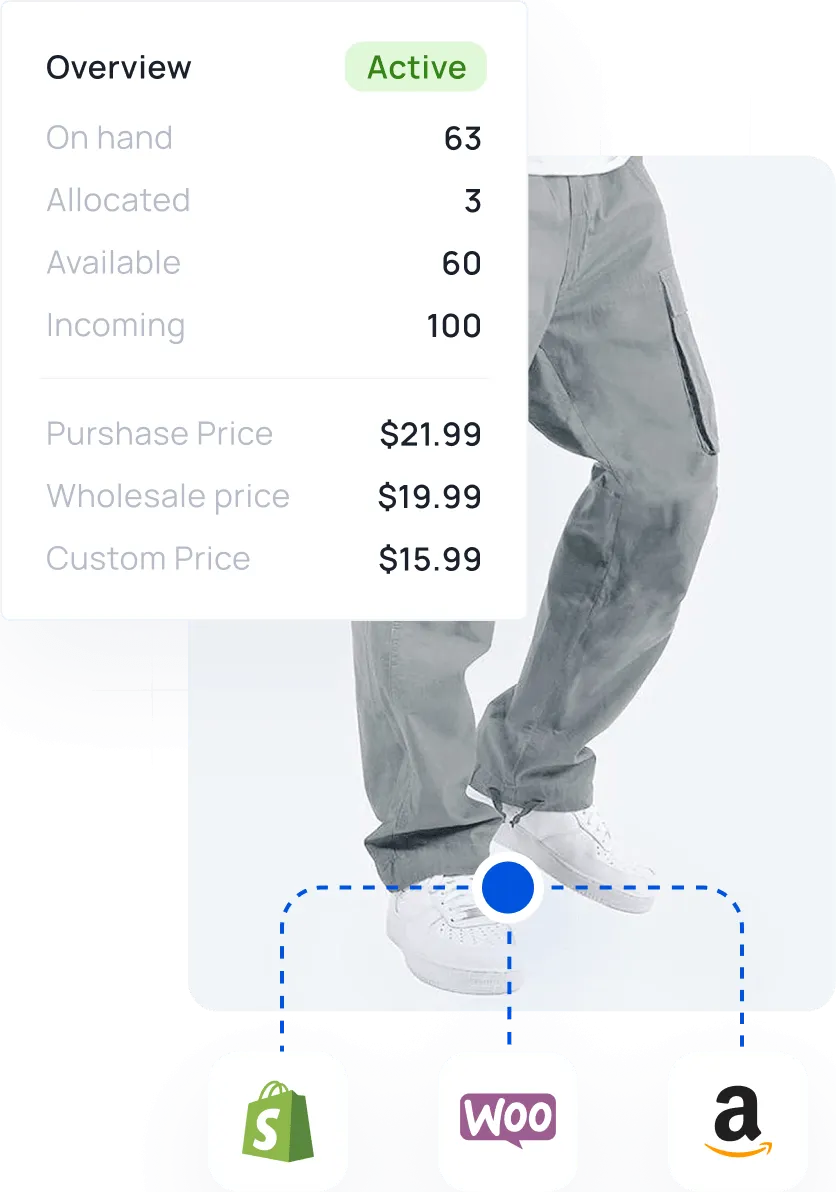
Retail, wholesale and markdown on one product
Price lists sit on the product: a retail list, a wholesale list per stockist with minimums, a promotional list for the sale. A trade order takes the buyer’s list; a web sale takes the store’s; the counter takes the markdown. One catalogue, one count, the right price each time.
Stockists can order themselves through a private portal on your domain, and back-orders on a sold-out size are tracked through to the restock rather than lost in an inbox.
- Retail, wholesale and promotional price lists on the same variants
- A stockist portal with per-buyer pricing and minimums
- Back-orders carried through a sell-out to the restock
See order management and the B2B portal.
Built for a label that sells three ways
Store, stockists and site on one stock. Each piece explained on its own page.
Counter and web on one count
Shopify POS and your Shopify or WooCommerce store sell from the same pool.
Returns to your books
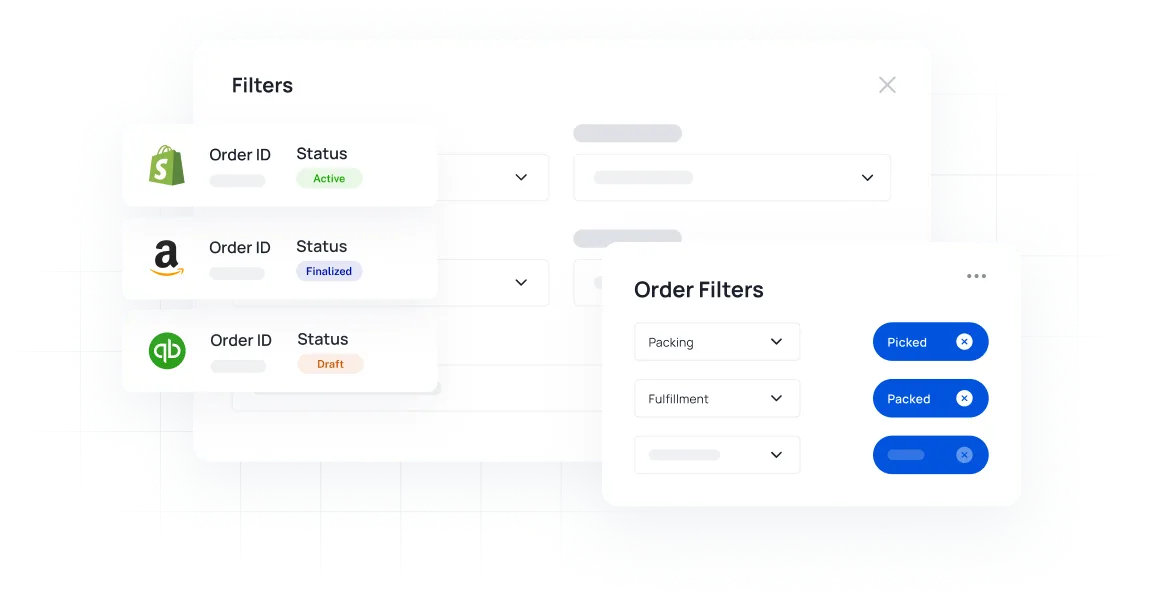
A return adjusts stock and COGS and posts a credit note to Xero or QuickBooks Online on its own.
Landed cost per unit
Freight and duty on a production run allocated by value across the sizes, so a unit’s cost is what it cost to land.
Shop, stockroom, warehouse
Stock per location with transfers between them, and pick lists at shipping.
Sell-through by variant
Sales, COGS and margin per size and colour, so the next buy is a number rather than a feeling.
Sell at the market
Take orders and check stock on iPhone, iPad or Android, anywhere there is signal.

We have been using Qoblex to help with the running of 10+ Shopify sites including both made to order, and stock inventory. Our main goal was to allow staff, in different locations, to always have correct stock on hand figures. However, the integration with Xero also cut down administration.
Frequently asked questions
Variants, price lists, returns and seasonal buying.
Is each size and colour a separate product?
No. It is a variant of one product. Stock, barcodes, prices and reorder points live at variant level, while the style stays one product to manage and to sell.
Can a stockist and a shopper pay different prices for the same item?
Yes. Retail and wholesale price lists sit on the same product; a stockist’s orders take their list, with its discounts and minimums, and the web store takes its own.
What happens to a return?
It is recorded against the sale, the variant’s stock and COGS are adjusted, and a credit note posts to Xero or QuickBooks Online. Nothing is retyped.
Can I take a back-order on a sold-out size?
Yes. The order is held against the variant and tracked through to the restock, and the reorder report shows what has gone negative.
How does it help with the next season’s buy?
Sales by product and variant show sell-through, margin and projected profit per size and colour, and the reorder report shows what ran out. Demand forecasting is included on Business and above.
How it works
Be up and running in a fraction of the time you’re expecting it to take.
- 1
Talk to an expert
Our experts have helped hundreds of product sellers just like you.
Book a demo - 2
Bring in a specialist
Engage an onboarding specialist to make it much easier for you.
Book a demo - 3
Go live fast
Unlike other systems, we can get you up and running within 1 week.