

Inventory management software for health, beauty and cosmetics
Beauty stock is dated, batch-numbered, sold in sets and shipped to stockists and shoppers from the same shelf. Qoblex tracks the batch and expiry on every unit, lets a gift set draw down its components without pre-packing, runs a small production batch from ingredient lots, and puts one count behind your web store, your trade customers and your retail counter.
What makes beauty stock hard to count
Four things at once: it expires, it comes in batches, it sells in sets, and it sells everywhere.
Dated stock in a sellable set
A gift set is only as fresh as its shortest-dated component. The set has no date of its own, so nothing warns you.
The same serum in four products
Sold alone, in the starter kit, in the holiday set and to a stockist. One count, four places it can be promised.
A batch you cannot find
A formulation issue names a batch. You need every unit, every set it went into, and every stockist who received it, before the afternoon is over.
Sets that draw down their components
A gift set in Qoblex is a bundle: a grouping of SKUs sold as one unit without tying stock up in pre-packed kits. When the set sells, each component comes down; when the serum sells on its own, every set that includes it moves too. Availability can never exceed the scarcest component.
Variants (shade, size, fragrance) sit on the components and the sets alike, so a set can be offered in the shades you actually have.
- Bundles assembled at the point of sale, never in advance
- One component in many sets, counted once
- Shade, size and fragrance as variants throughout
See inventory control.
Every batch, from ingredient to stockist
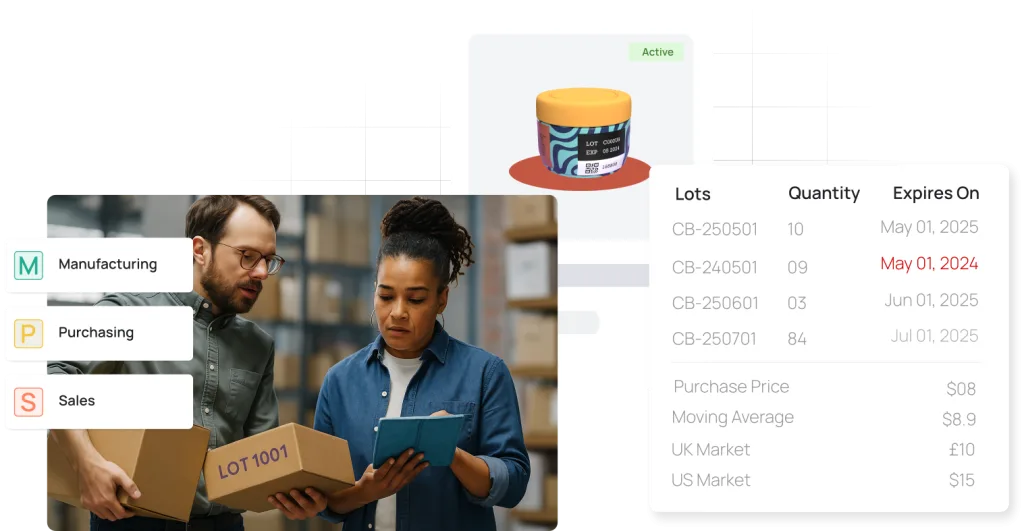
Batch numbers and expiry dates are recorded as goods arrive, and Qoblex shows what is nearing its date across every location. If you make product, the formulation is a bill of materials: you select which ingredient batches go into a run and assign a batch to what comes out, so the finished product carries its provenance.
When a batch is questioned, you see the affected stock and every customer who received it, across retail, wholesale and online, from one record.
- Batch and expiry on every unit, per location
- Small-run production from selected ingredient batches
- Affected stock and the customers who received it, in one view
See batch and lot tracking and manufacturing.
Built for a brand that sells everywhere
Web store, stockists and counter, on one stock. Each piece explained on its own page.
Shopify and WooCommerce
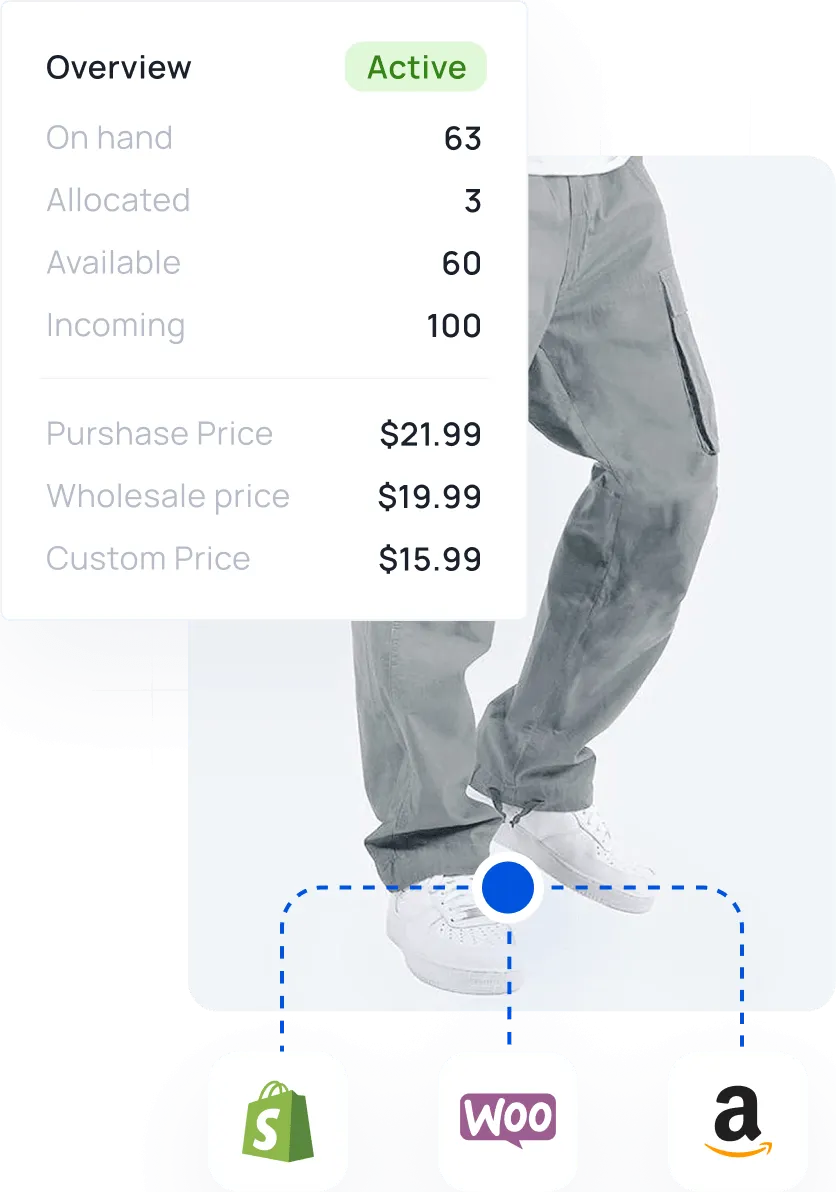
Your own store on the same count as everything else, with a price list per store if you run several.
A stockist portal
Salons, spas and boutiques reorder at their own price list, against live stock, on your domain.
Counter and web on one count
Shopify POS and your web store draw from the same pool of stock.
Landed cost on imports
Freight and duty on packaging and ingredients allocated by value, so a unit’s cost is real.
Margin by product and set
Which sets and which singles earn, at true cost, per variant.
Returns to your books
A return adjusts stock and COGS and posts a credit note to Xero or QuickBooks Online.

I am a paying customer that utilizes the integration with Shopify to Qoblex to Xero… What I trialed: TradeGecko, Cin7, and Dear Inventory… the value and service are insanely good. The number of integrations and ease of use is something I haven’t found even for triple their price.
Frequently asked questions
Sets, batches, small runs and what a stockist sees.
How do gift sets avoid overselling a component?
A set’s availability is derived from its components, so it can never show more than the scarcest item allows. Selling the set draws each component down; selling a component alone moves every set it belongs to.
Can a set inherit its components’ expiry?
Components carry their own batch and expiry, and the expiry view shows what is nearing its date across every location. When a set is built as a production run, you select which component batches go in and the finished set carries a batch of its own.
I make in small batches. Does that fit?
Yes. A formulation is a bill of materials, a run is a production order, and you choose which ingredient batches to consume. Finished goods come into stock with their own batch and a cost built from what went in.
Can my stockists order themselves?
Yes. The B2B portal gives each stockist a login to a private store on your domain, at their own price list and minimums, against your live stock. Orders land in the same inventory as your web sales.
Does it handle regulatory labelling or ingredient compliance?
No. It keeps the batch, expiry and movement records that traceability depends on. Labelling and formulation compliance remain with you; Qoblex is the record behind them.
How it works
Be up and running in a fraction of the time you’re expecting it to take.
- 1
Talk to an expert
Our experts have helped hundreds of product sellers just like you.
Book a demo - 2
Bring in a specialist
Engage an onboarding specialist to make it much easier for you.
Book a demo - 3
Go live fast
Unlike other systems, we can get you up and running within 1 week.