

Inventory management software for small businesses
A spreadsheet does not fail loudly. It drifts, a count here and a channel there, until the number on the screen and the number on the shelf disagree. Qoblex gives a small team one live count behind everything it sells, a phone that scans, and a reorder point that drafts the purchase order for you. Two users, two locations and unlimited SKUs on Starter, live inside a week.
Spreadsheets stop working at about two hundred orders a month
Not because the spreadsheet breaks. Because three things start happening at once, and none of them show up in the file.
You run out of your best sellers
Nothing warns you a line is running low until a customer finds the empty shelf. The sale is gone, and often the customer with it.
Cash sits in stock that will not move
Ordering on instinct buys too much of the slow lines and too little of the fast ones. Overstock is working capital you cannot spend.
Two channels disagree about one shelf
The website sells what the shop floor sold an hour ago, and someone has to write the apology. A refund is the most expensive kind of order.
One count, kept by every sale
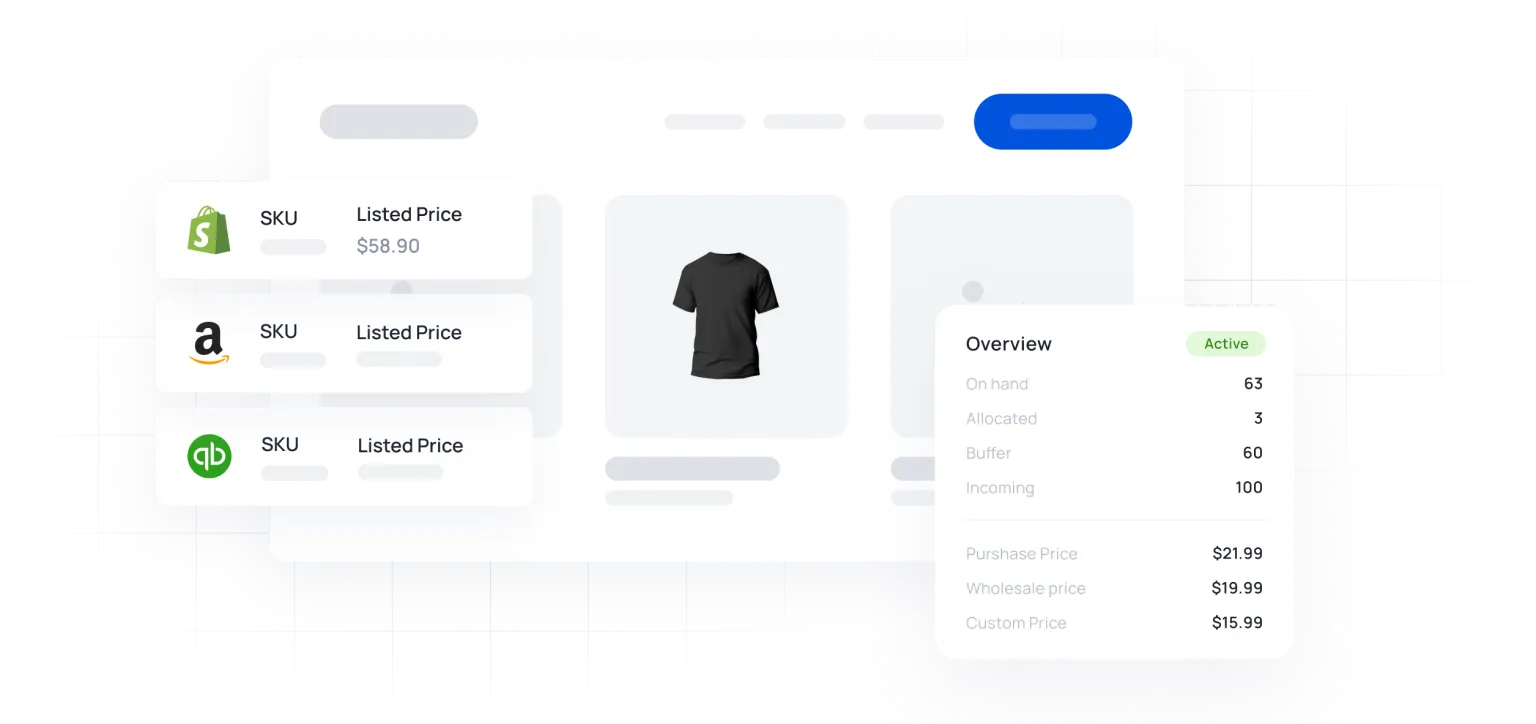
Every sale, return and delivery moves the same number. Stock on hand is tracked for every product and variant and tied directly to orders and adjustments, so there is nothing to reconcile at the end of the week. The count is the count.
Counting is done with the phone you already have. Qoblex uses the camera as a barcode scanner, so a stock take or a goods receipt is a walk down the aisle, not a dedicated device and a training session.
- Stock on hand, allocated and incoming, per location
- Barcode scanning from an iPhone, iPad or Android phone, with no extra hardware
- A dated history of every change to every product, and who made it
See inventory control in detail.
Reorder before you run out, not after
Set a reorder point on each line. The reorder report shows every variant that has fallen through it, and every variant that has gone negative, so Monday morning starts with a list rather than a search.
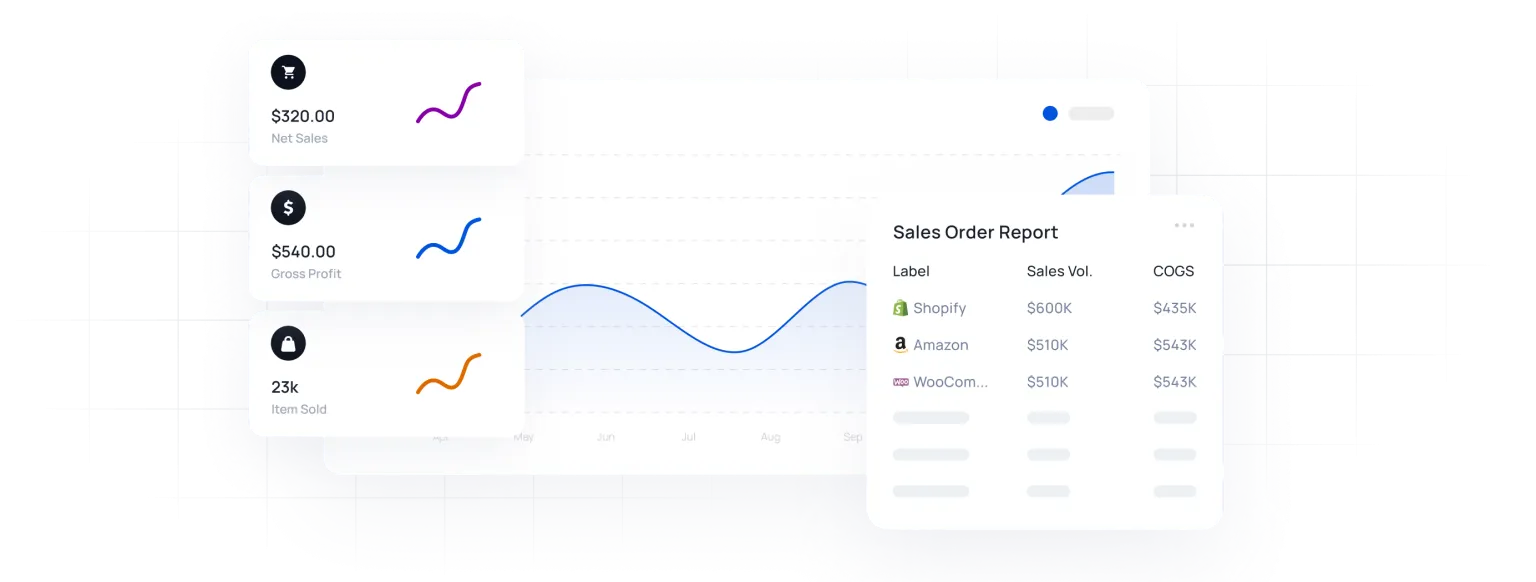
Sales by product tells you which lines earn their shelf space: sales volume, COGS, margin and projected profit per product and variant, from the live stock position rather than a closed period.
- Reorder points and a low-stock report across every location
- Margin and dead-stock reporting by product and variant
- Purchase orders that carry freight, so cost per unit is the real one
See reporting and purchasing.
What you get on day one
Everything below is in Starter. The plan is sized for a small business: two users, two locations and two thousand orders a year. It grows when you do.
Phone barcode scanning
Find a product, count it or adjust it from the camera on an iPhone, iPad or Android phone.
Shopify and WooCommerce
One pool of stock behind your web store, with orders and stock levels synced both ways.
Bundles and kits
Sell grouped items without tying stock up in pre-packed kits. The components come down when the bundle sells.
Orders, retail and wholesale
Retail and trade prices on the same product, quotes with one click, and back-orders tracked through a stockout.
Xero and QuickBooks
Invoices, bills and credit notes post to your accounts as they happen. Returns adjust stock and COGS automatically.
Reports that use real cost
Stock value at moving average cost, margin per product, and what is nearing its reorder point.
A spreadsheet, or Qoblex
A spreadsheet is genuinely fine for one channel, one currency and a handful of orders a month. This is where it stops being fine.
| Feature | Spreadsheet | Qoblex |
|---|---|---|
| Stock updates | When someone remembers | On every sale, return and delivery |
| Low-stock warning | None | A report, and a drafted purchase order |
| Two channels, one shelf | Reconciled by hand | One shared count |
| Cost per unit | Invoice price | Freight and duty included |
| Who can work in it | One file, one person at a time | Your team, with roles |

…the answer to many inventory and accounting challenges I faced with a slightly complicated type of product…Now I am able to quite easily control the inventory of the packages even if the item is sold individually or in multiple other packages on the website.
Frequently asked questions
Cost, setup, and whether a business your size needs this at all.
What does it cost for a small business?
Starter is $99 a month and covers up to 2,000 orders a year, two users, two locations and unlimited SKUs. Integrations, the API and the mobile app are add-ons on Starter, so you pay for the pieces you connect. See pricing.
Is it worth it if I only have a few hundred SKUs?
If you sell on one channel, in one currency, with no imports and a handful of orders a month, a spreadsheet is genuinely fine. It stops being fine when one delivery has to be split across channels, when two people need the file at once, or when you need to know what a unit really cost.
Do I need technical skills to set it up?
No. Setup is an import, from a CSV or a connected Shopify or WooCommerce store, plus a connection to your accounting. Business includes an hour with an onboarding specialist, and most small teams are running within a week.
Will it work with what I already use?
Shopify, WooCommerce, Xero and QuickBooks Online connect directly. The mobile app runs on iPhone, iPad and Android. Anything else can be reached through the API.
What happens to my data if I leave?
It is yours. Products, stock movements and orders export at any time, and there is no contract to give notice on.
How it works
Be up and running in a fraction of the time you’re expecting it to take.
- 1
Talk to an expert
Our experts have helped hundreds of product sellers just like you.
Book a demo - 2
Bring in a specialist
Engage an onboarding specialist to make it much easier for you.
Book a demo - 3
Go live fast
Unlike other systems, we can get you up and running within 1 week.