

Inventory management software for makers and small manufacturers
If you buy components and sell what you build from them, you have two inventories and most software only sees one. Qoblex holds the bill of materials, the production order and the finished good together with your stock and sales: components come down as goods are made, a batch on the way in is a batch on the way out, and the same costing method covers what you bought and what you built.
What goes wrong when production is a spreadsheet
Retail software sees finished goods. Accounting software sees invoices. Neither sees the parts on the bench.
Two inventories, one system
Raw materials are counted on a clipboard and finished goods in the store. A production run moves value between them, and nothing records it.
A recipe nobody wrote down
The bill of materials lives in the head of the person who builds it. When they are away, the run does not happen or happens wrong.
Cost that stops at the parts
Labour and freight on the components never reach the finished good, so the margin on what you made is a guess dressed as a number.
Bills of materials that draw down stock
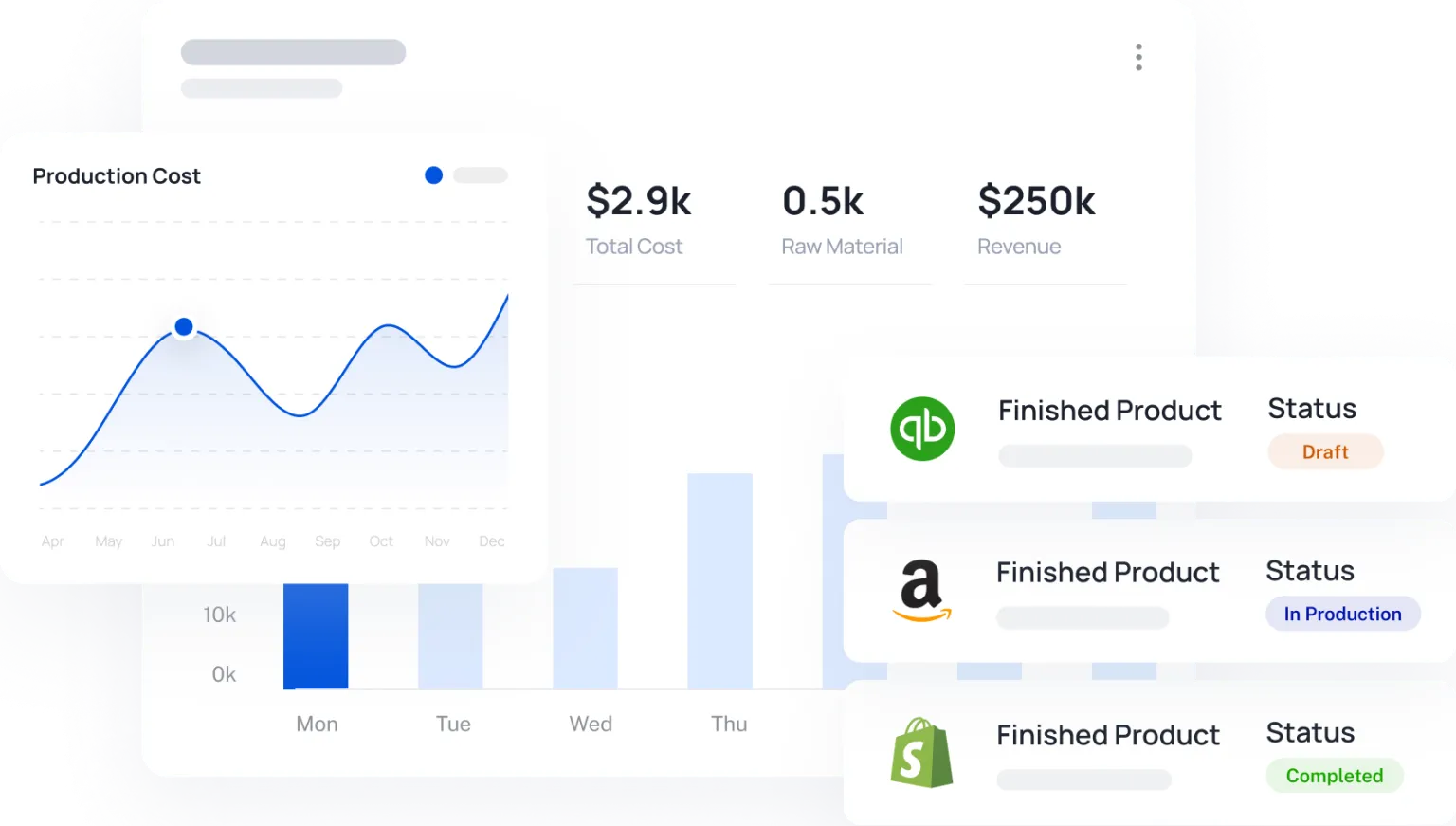
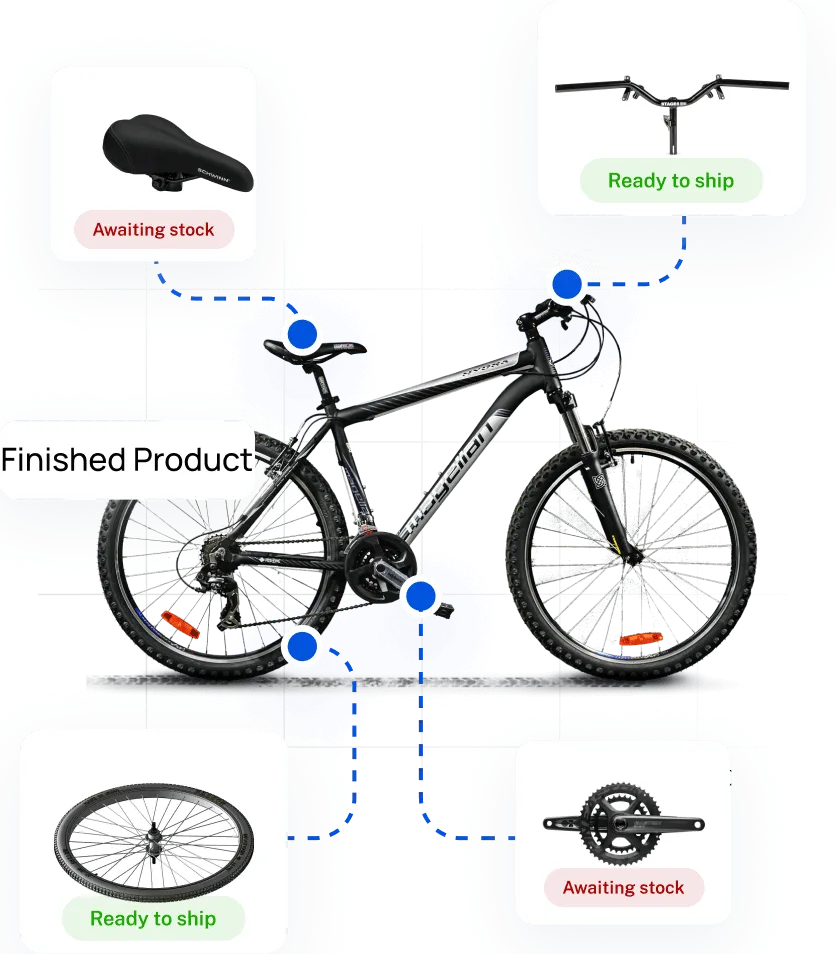
A bill of materials lists a finished good’s complete set of components, in stages if the build has stages. Raise a production order against it and Qoblex tracks it from draft through in progress to complete; when it completes, the components come out of stock and the finished goods go in.
Assembly and disassembly both work: a kit built from parts, or a returned unit broken back into them.
- Multi-stage bills of materials
- Production orders tracked from draft to complete
- Assembly and disassembly, in one place
See manufacturing.
A batch in is a batch out
For batch-tracked components, you choose which batches go into a production order and assign a batch to what comes out. The finished good carries its provenance, so a problem with one supplier lot can be traced to every unit built from it, and to who received them.
Costs you carry in manufacturing, such as labour and shipping on components, are tracked the same way as landed cost on bought goods. One costing method covers bought and made stock, so the margin on what you build is real.
- Batch selection on production orders, batch assignment on finished goods
- Full lot and serial traceability, recall-ready
- One moving average cost across bought and built stock
See batch and lot tracking and inventory costing.
The rest of a maker’s system
Production is one part. These are the others, each on its own page.
Component purchasing
Purchase orders for parts, with freight allocated by value and a three-way check against the bill.
Insufficient-stock alerts
Know before a run starts that a component will not stretch to it.
Bundles and kits
Sell a set without pre-building it, or build it as a production order, whichever the product calls for.
Sell what you build
Finished goods in your Shopify or WooCommerce store, trade customers in a B2B portal, one stock behind both.
Production reconciliation
What was planned against what was actually used and made.
Accounting
Purchases and sales post to Xero or QuickBooks Online; stock value reflects what you built.

I am a paying customer that utilizes the integration with Shopify to Qoblex to Xero… What I trialed: TradeGecko, Cin7, and Dear Inventory… the value and service are insanely good. The number of integrations and ease of use is something I haven’t found even for triple their price.
Frequently asked questions
Bills of materials, batches, costing and where the plant floor ends.
Is this an MRP system?
It is inventory management with production in it: bills of materials, production orders, assembly and disassembly, and batch tracking through the build, built for a maker who also sells. It is not shop-floor scheduling, machine capacity planning or a plant-level ERP.
Can a bill of materials have sub-assemblies?
Yes. Bills of materials are multi-stage, so a finished good can be built from components that are themselves built.
How does a batch follow through production?
On a production order you select which batches of each batch-tracked component to consume, and assign a batch to the completed goods. The finished product carries the record, so a recall on a component lot finds every unit made from it.
How is the cost of a finished good worked out?
From what went into it. Component cost, including allocated freight and duty, plus costs you record on the production such as labour, on the same moving average basis as bought stock. See inventory costing.
Can I sell what I make and what I buy from the same store?
Yes. Built and bought products sit in one catalogue with one pool of stock, behind the same Shopify or WooCommerce store and the same B2B portal.
How it works
Be up and running in a fraction of the time you’re expecting it to take.
- 1
Talk to an expert
Our experts have helped hundreds of product sellers just like you.
Book a demo - 2
Bring in a specialist
Engage an onboarding specialist to make it much easier for you.
Book a demo - 3
Go live fast
Unlike other systems, we can get you up and running within 1 week.